


I am a proud Australian. Even prouder because I left another country and took up citizenship in what I consider to be one of the most tolerant and beautiful nations on this earth.
Australia for all intents and purposes was born on 26th January 1788. January 26 marks the landing of the First Fleet, a convoy of 11 ships carrying convicts who landed at Port Jackson in 1788. This event represents the founding of the colony New South Wales; the most populated state in Australia.
Because it marks the day of colonisation, Aboriginal Australians have launched major campaigns and renamed it Invasion Day. That may be so but the reality is prosperity started coming to this nation when the first Europeans landed and to put it frankly a great many indigenous people have prospered from that. And so they should.
In recent years, efforts have been made to make the holiday include all Australians, and in 2013, the Australian flag and Aboriginal flag were raised on the Sydney Harbour Bridge for the first time on Australia Day. It hasn’t worked.
Now there are moves afoot to move the day and instead mark the celebration of Indigenous living in this nation. Now I don’t have a problem with that and nor should any decent thinking Australian. However I do object to removing European history from our nation.

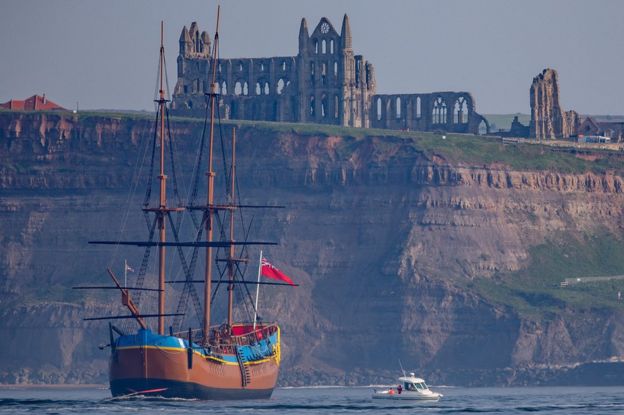
Face it. Captain James Cook was one of the greatest explorers and navigators in history. In three voyages, Cook sailed thousands of miles across largely uncharted areas of the globe. He mapped lands from Australia and New Zealand to Hawaii in the Pacific Ocean in greater detail and on a scale not previously achieved. As he progressed on his voyages of discovery, he surveyed and named features, and he recorded islands and coastlines on European maps for the first time. He displayed a combination of seamanship, superior surveying and cartographic skills, physical courage, and an ability to lead men in adverse conditions. Cook was attacked and killed in 1779 during his third exploratory voyage in the Pacific while attempting to kidnap Kalaniʻōpuʻu, a Hawaiian chief, in order to reclaim a cutter stolen from one of his ships. He left a legacy of scientific and geographical knowledge which influenced his successors well into the 20th century, and numerous memorials worldwide have been dedicated to him. He is held in such high regard in Hawaii that the British national flag sits in a corner of the state flag.
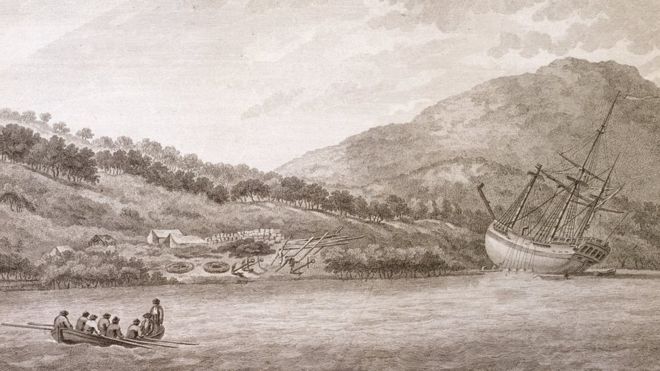
When he sailed down the east coast of Australia in 1770 and later came ashore he found a land that explorers had searched for for years. The Dutch actually landed on the west coast a century before but did not realise where they were and laid no claim. Upon his return to England the government was so keen to colonise the new found lands that they began to empty their jails and ship people off. Most were sentenced to seven years penal servitude and the voyage must have been hell. Nobody really knew what to expect and upon arrival they foolishly tended to ignore and attack the native people rather than try and learn how to live off the land from them.
But that does not mean all those who landed on those leaking ships were bad. For sure they had never encountered a land like this before and it must have been a daunting task working in conditions that were to say the least harsh. Many were thrashed for a minor infringement and yet the colonial leaders turned a blind eye to promiscuity. Slowly but surely the more adventurous took off and found riches unknown before. A land that was blindingly hot, dry, often without fresh water and full of animals and insects they had never encountered before gradually became one of the richest nations in the world. Australia is now rated as the 18th richest nation in the world.
But I digress. I’m no fan of our new Prime Minister Scott Morrison but when he said these words I had to agree: “We don’t have to pull Australia Day down to actually recognise the achievements of Indigenous Australia, the oldest living culture in the world; the two can coexist,.
“Australia Day is Australia Day … You can’t pretend your history isn’t your history.
“That’s the day the flag went up in Farm Cove. That’s the day the course of the nation changed.”
And so be it. You can argue about an invasion, you can argue about disease and killing and nobody with any sense will argue against you on those subjects. They are our shame and we should never forget them. But the Australia that has gradually changed in over 200 years has brought world standards in health, housing and opportunities (if you choose to take them) to make a success of your life.
To put it bluntly you don’t have to ignore your past but life is what you make it. I know one lady whose ancestors were convicts on that fleet. She is a Judge in Sydney now.
For the record it is thought the First Fleet carried the following:
The First Fleet consisted of 11 ships carrying approximately 1,487 people. As far as records show, this included:
- 759 convicts,
- 13 children of convicts,
- 252 marines, wives and children
- 20 officials
- 210 Royal Navy seamen
- 233 merchantmen
And the journey of the First Fleet took about 8 months to travel the 15,000 miles between England and Australia. Nowadays a Qantas plane can go from Australia to England in 19 hours. We’ve come a long way.
Parts of this essay are attributed to Wikipedia.
 Australia All Over